
 English
-
 English
 -
Deutsch
-
Русский язык
-
Français
-
Português
-
日本語
-
Español
-
Türkçe


Ask For A Quick Quote
we will contact you within 1 working day, please payattention to the email with the suffix
sales01@stsewingcraft.com
2024 Autumn/Winter China International Fashion Week Concludes: Focusing on Chinese Aesthetics and Heritage Innovation
Author:China Embroidered_Printed Patches Manufacturer-Shi
Click:
Time:2024-12-12 15:31:24
2024 Autumn/Winter China International Fashion Week Concludes: Focusing on Chinese Aesthetics and Heritage Innovation
The nine-day AW24 China International Fashion Week, themed “Empowerment,” has recently concluded.
This year’s Fashion Week continued to highlight themes such as Chinese aesthetics, heritage innovation, Guochao crossovers, sustainability, digital fashion, and intellectual property. Over 130 events, including trend releases, trade exhibitions, themed displays, high-end forums, and professional competitions, brought together fashion forces from six countries, propelling this 27-year-old event into a new phase of development.
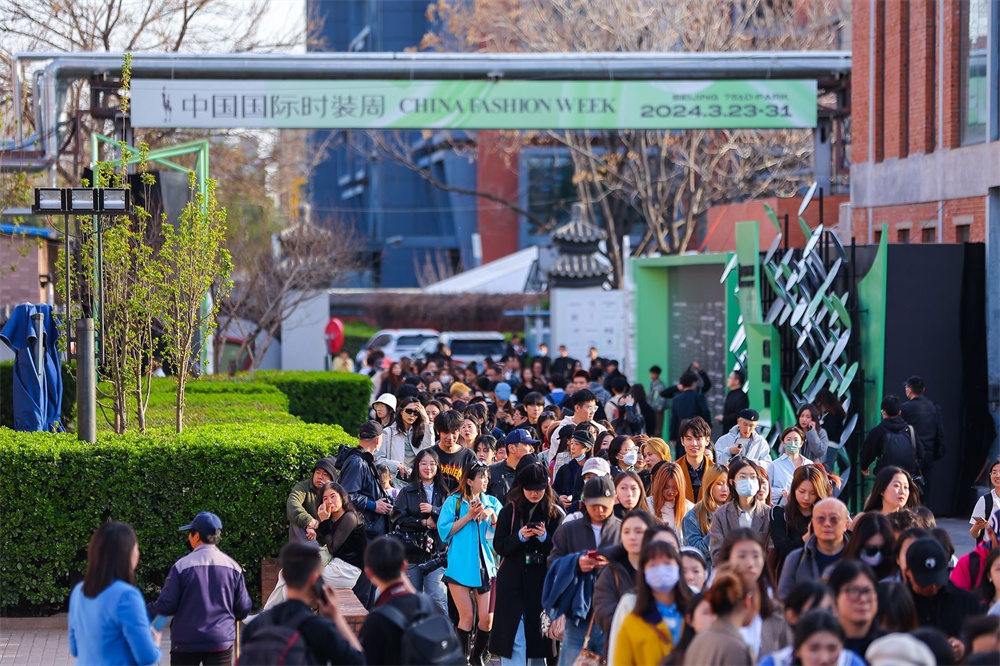
With the growth of China’s economy and national strength, younger generations are increasingly exposed to Chinese culture through multiple channels. Chinese aesthetics, supported by national cultural initiatives, have become a hot topic, gaining deeper resonance among audiences.
China International Fashion Week has long advocated for “Chinese aesthetics.” This season, numerous designers used fabrics, colors, craftsmanship, and structural design to comprehensively interpret the enduring, profound, and evolving nature of Chinese culture.
The opening show, Sunrise Eternal by the brand Liuli, drew inspiration from the intangible cultural heritage of the Xiangxi Miao ethnic group. The collection integrated traditional red attire patterns, Chinese-style structural tailoring, Miao silverwork, batik, embroidery, and Chinese landscape motifs with contemporary expressions, telling a story of heritage and values. BOTAO infused Daoist cosmology into its designs, creating a new Chinese-style apparel series with a strong Chinese aesthetic atmosphere. ANADI drew inspiration from The Book of Songs and Erya, merging luxurious Chinese styles with international trends, and evoked classical charm. Living on the Left’s Ma Mian Skirt show spotlighted a cultural trend, where legendary actress Zhao Yazhi closed the event, embodying the beauty of Chinese style.
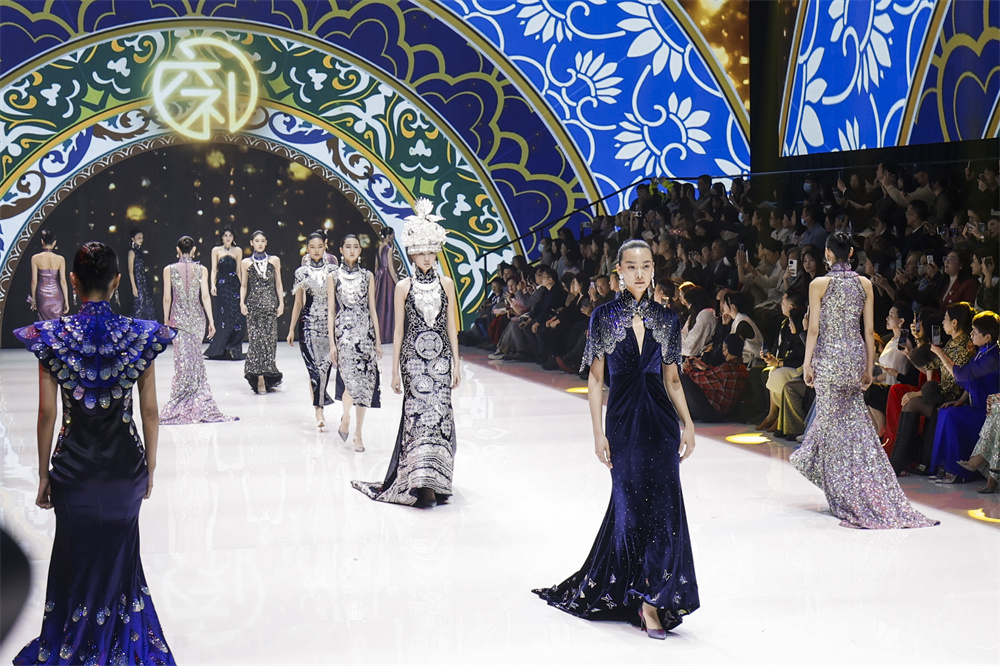
Subai used spiritual practice as its inspiration, blending Tibetan colors, patterns, attire, and daily items with modern tailoring to present a serene and mystical highland lifestyle. Lungmen Moon Window by Hua Xia Show·Yang Jie drew from the thousand-year-old culture of the Longmen Grottoes to interpret traditional Chinese art. Guan Ju Ji derived inspiration from elements such as “landscape,” “flowers,” “auspicious symbols,” “treasures,” “silk,” and “brocade,” reflecting these themes in its designs. NUFANG incorporated Chinese cultural heritage into its designs, featuring jacquard patterns, gold thread embroidery, 3D velvet sequins, antique hairpins, and carved motifs, showcasing a distinctive Oriental fashion. The brand Yun Xiang, named after Li Bai’s famous poem Qingping Tune, combined traditional cheongsam craftsmanship with Western-style gowns and floral motifs.
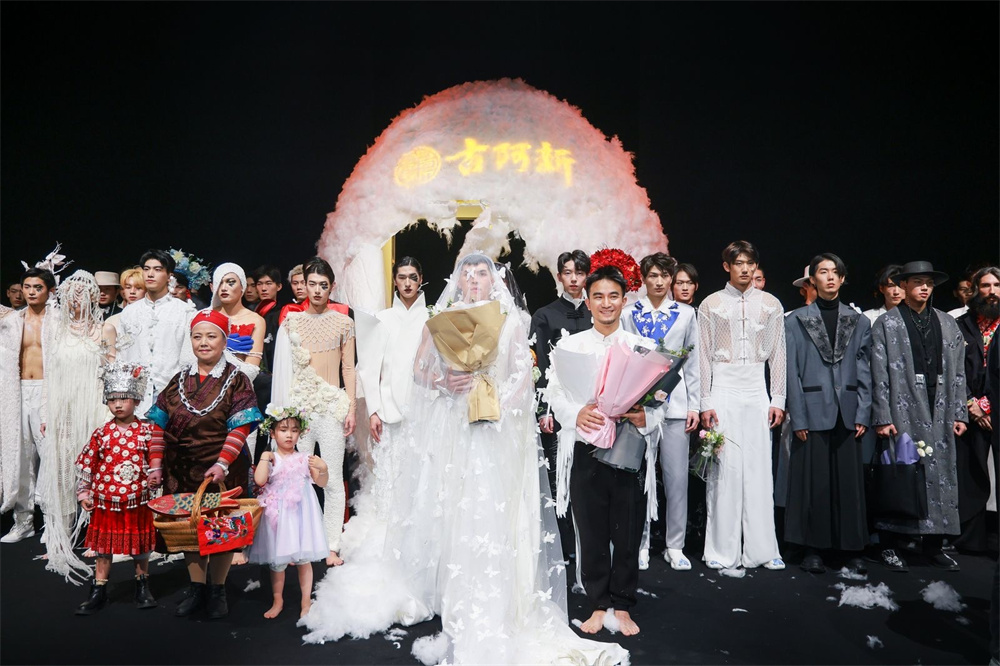
Meanwhile, the 13th 10+3 SHOWROOM Young Designer Base Program saw emerging brands presenting diverse styles, techniques, and interpretations of Chinese aesthetics.
These designers’ efforts to shape their brands’ cultural essence and artistic expression signal a true renaissance of Chinese styles. A Chinese aesthetic design language is gradually taking shape.
The second Oriental Aesthetics: Colors and Visual Forms Exploration forum analyzed how societal and aesthetic progress influence clothing brands' value systems and how they can integrate traditional Chinese culture into brand development.
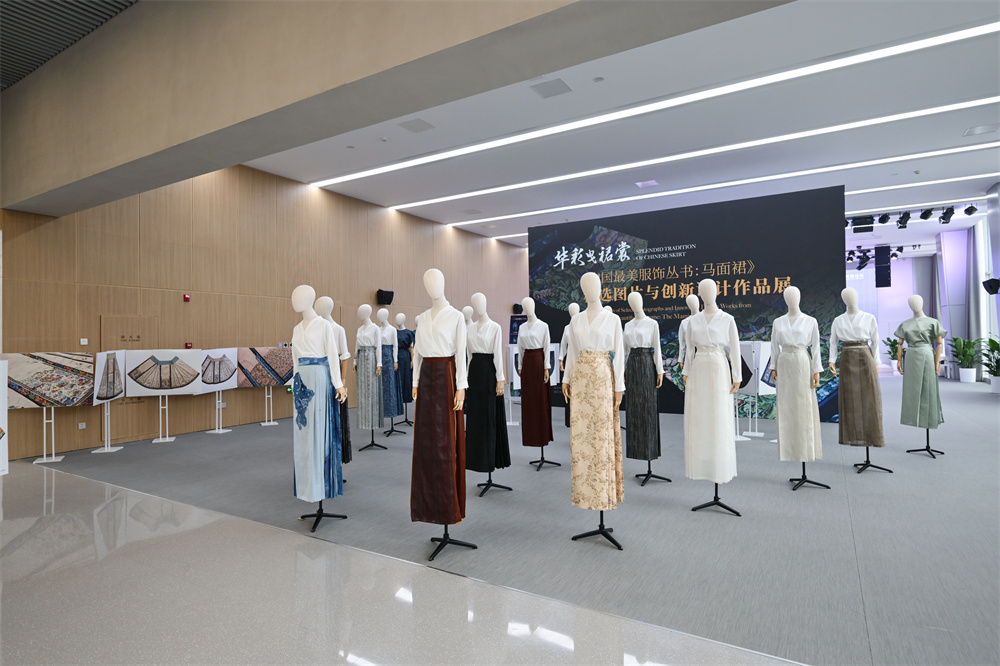
Exhibitions such as Radiant Robes: The Most Beautiful Chinese Clothing Series - Ma Mian Skirt and Cui·Ying: Red Metropolis and Chinese Aesthetic Proposals presented rich Chinese aesthetic elements and their seamless integration into modern life.
The Fashion Climate Innovation 30·60 Carbon Neutral Acceleration Program showcased corporate advancements, while the Future Materials and Design forum explored combining fashion aesthetics with humanistic care. Many brands demonstrated their commitment to sustainability, including eco-friendly materials such as children’s protective fabrics, faux fur, and warm silk blends.
The Mirror Realm fashion show in Shengze Town, a collaboration with Golden Top Award-winning designer Zhang Yichao, used eco-friendly fabrics from the 6th China Eco-Friendly Fabric Design Contest to express a love for nature through sustainable fashion.
The 13th Dalang Cup Women’s Wear Design Competition showcased 64 innovative designs by 16 winners, incorporating themes like technology, sportswear, and urban fashion. These designs creatively fused Chinese traditional culture—opera, papermaking, porcelain, folk gods, and lacquerwork—with contemporary aesthetics and sustainability, using eco-friendly fabrics and techniques like tea dyeing, plant dyeing, and 3D printing.
At the children’s fashion section, designers focused on creating whimsical and eco-friendly designs that respected children’s innate curiosity and imagination.
Professor Jia Xizeng of Tsinghua University’s Academy of Arts and Design noted, “The deep humanistic care embedded in Oriental aesthetics allows design to connect with life and society, creating works that truly resonate with consumers and add value to design.”
Source: The Paper






Embroidered Sports Iron On Patches
Twill Canvas Pantone For Cloth
Merrow Border Patch Embroidered
Boy Scout Uniform iron on patches
Twill And Felt Iron On Embroidered Patches
Metallic Threads Fabric Letter Patches
woven patches&Woven label
Sequins lace embroidery fabric
Embroidery tulle fabric
Organize embroidery fabric
beaded embroidery fabric
lace fabric
lace trimming
CUSTOMER SERVICE
Mon - Fri7 am - 18pm
 2nd Floor of 3# building,39# first Road of wentangci industry zone,dongcheng zone,dongguan city,guangdong province,China
 0086-13763137691
 sales01@stsewingcraft.com
Shitai © All Rights Reserved.
